Built for -40°C
Block Heaters: The Complete Canadian Guide
How they work, when to plug in, what fits your vehicle, what installation costs in your city — and how to fix the one that quit on the coldest morning of the year. Independent, Canadian, and obsessively researched.
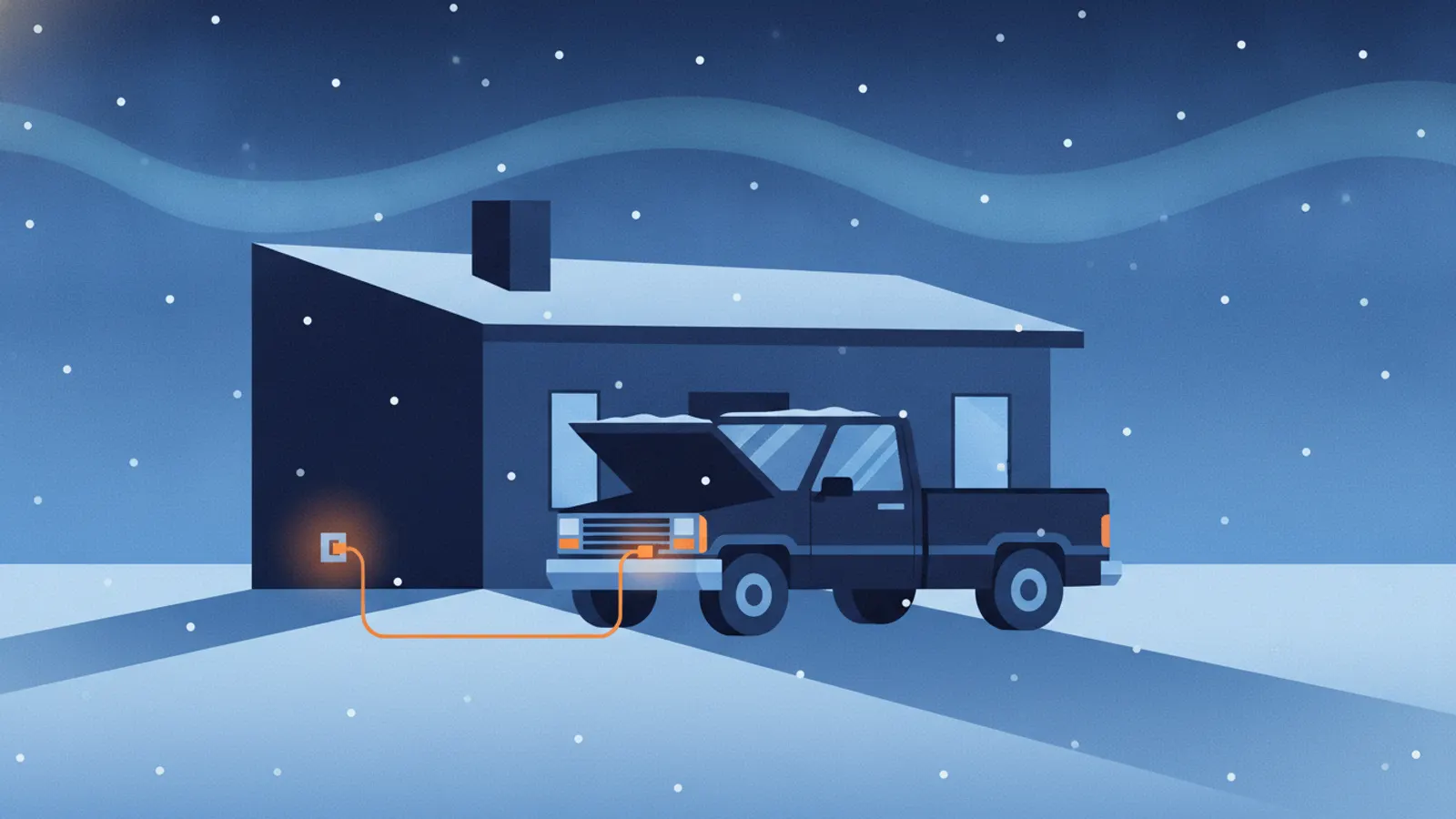
What is a block heater?
A block heater is an electric heating element — usually installed in your engine's coolant jacket — that plugs into a regular 120 V outlet and keeps the engine warm while the vehicle is parked. At -30°C, a plugged-in engine sits 20–30°C warmer than the air around it: oil flows, the battery delivers, and the engine starts like it's fall instead of grinding through the coldest morning of the year.
In most of Canada that's not a luxury. Below about -15°C, cold starts get slow and harmful; below -25°C they become genuinely risky. A block heater — often paired with a battery blanket and run on a cheap timer — removes the risk for pennies a night.
20–30°C
warmer than outside air when plugged in
3–4 hrs
before driving is all you need (use a timer)
≈25¢
per night on a timer, in most provinces
-15°C
the temperature where plugging in starts to matter
Every type of block heater, compared
All types →Frost Plug (Cartridge)
$40–$120 CAD · 400–1,000 W
The most effective permanent option for any vehicle driven through a real Canadian winter.
Inline Coolant
$60–$180 CAD · 600–1,500 W
Vehicles where no frost-plug element exists, or diesels that want more heat than a single cartridge provides.
Oil Pan
$30–$100 CAD · 150–500 W
A second heat source, vehicles with inaccessible frost plugs, or equipment that lives outside.
Magnetic
$40–$90 CAD · 200–800 W
Renters, second vehicles, equipment, or anyone who can't (or won't) do a permanent install.
Battery Blanket & Battery Warmer
$30–$80 CAD · 60–150 W
Every cold-climate vehicle — a cold battery is the #1 reason cars don't start at -30°C.
Dipstick
$20–$50 CAD · 60–200 W
Last-resort or emergency use where nothing else fits.
Circulating (Pump) Coolant
$120–$400 CAD · 1,000–1,800 W
Diesel pickups, fleet and heavy equipment, and anyone in the -40°C belt.
Transmission & Auxiliary Pans
$40–$120 CAD · 100–500 W
Plow trucks, equipment, and vehicles that must work — not just start — immediately in deep cold.
Find the heater that fits your vehicle
All vehicles →Factory options, recommended heater type, wattage, and cord location — by make and model, for the vehicles Canadians actually drive.
Guides
All →How Does a Block Heater Work?
What a block heater actually heats, how much warmer your engine gets, and why plugging in transforms -30°C starts.
When Should You Plug In a Block Heater?
The temperature thresholds that matter: when a block heater is optional, recommended, and non-negotiable — plus how Canadians actually run them with timers.
Block Heater Wattage: How Many Watts Do You Need?
Typical block heater wattages by engine type, why more watts isn't automatically better, and what that draw means for your extension cord and circuit.
How Much Electricity Does a Block Heater Use?
What plugging in actually costs per night and per winter in every province — with the math shown, and the one habit that cuts the bill by two-thirds.
Do You Actually Need a Block Heater?
Modern engines and synthetic oils start in cold that would have killed a carbureted car — so who still needs a block heater? An honest breakdown by climate, parking, and vehicle.
How Long Should a Block Heater Be Plugged In?
Four hours is the magic number.
Fix it
All →How to Test a Block Heater (Multimeter Guide)
The 5-minute multimeter test that tells you definitively whether your block heater works — plus the quick checks that don't need any tools.
Block Heater Cord Replacement: Identify the Right Cord
A missing or damaged cord does not always mean you need a new heater.
Block Heater Not Working? Diagnose It in 10 Minutes
Work from the wall to the element: outlet, timer, cord, connector, element.
Block Heater Tripping the Breaker or GFCI? Here's Why
A tripping GFCI means current is leaking somewhere it shouldn't.
Block Heater Leaking Coolant: Serious or Simple?
Coolant under the block heater usually means an O-ring or seating problem — occasionally a cracked element.
Installation & winter guides by city
All cities →Quick answers
What does a block heater do?
A block heater is an electric element that warms your engine's coolant (or oil) while plugged into a wall outlet, keeping the engine 20–30°C warmer than the outside air so it starts easily, wears less, and heats the cabin sooner in deep cold.
When should I plug in my block heater?
Plug in when overnight temperatures drop below about -15°C, and always below -25°C. Three to four hours before driving is all it takes — a timer makes it automatic.
How much does a block heater cost to install in Canada?
The heater itself runs $40–$180 and professional installation typically costs $150–$350 all-in, depending on your engine and city. Many Canadian-market vehicles already have one installed from the factory.
How much electricity does a block heater use?
A typical 400 W heater on a 4-hour timer uses about 1.6 kWh per night — 11 to 29 cents depending on your province, or roughly $25–$45 per winter.